Background and History of Art Form
- Year of publication for artwork: 1756
- Genre/Style: Rococo Portrait
- Media/Medium: Oil on Canvas
- Dimension: 212 x 164 cm (83.5 in x 65 in)
- Location of Display: Alte Pinakothek, Munich, Germany
Background and History of Artist
- Full Name/Recognized Name: Francois Boucher (French)
- Born Date of Artist: 29th September 1703
- Death Date of Artist: 30th May 1770
- Movement: Rococo
Brief Overview/History of the Artwork
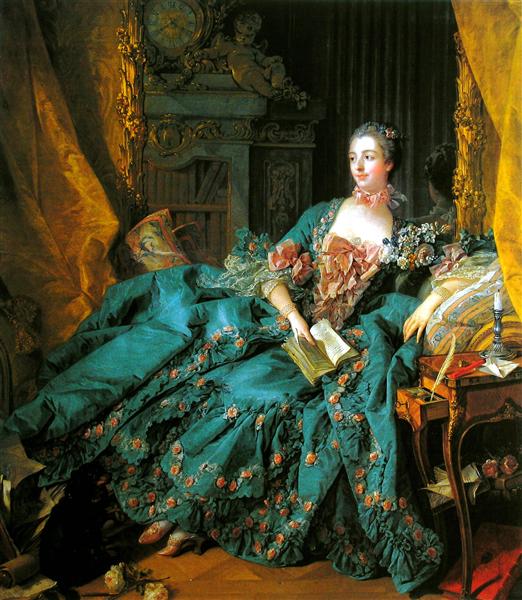
- Portraying Jeanne Antoinette Poisson, Marquise de Pompadour.
- She was the mistress of King Louis XV & a prominent patron of Francois Boucher.
- Madame de Pompadour was not like the other mistresses of the king; she continued to be a presence at the court by creating a cordial relationship with the Queen.
- She would frequently accompany the King on hunting trips and social gatherings.
- She would commission painting of herself to hide her aging looks.
Analysis of the Colors/Theme
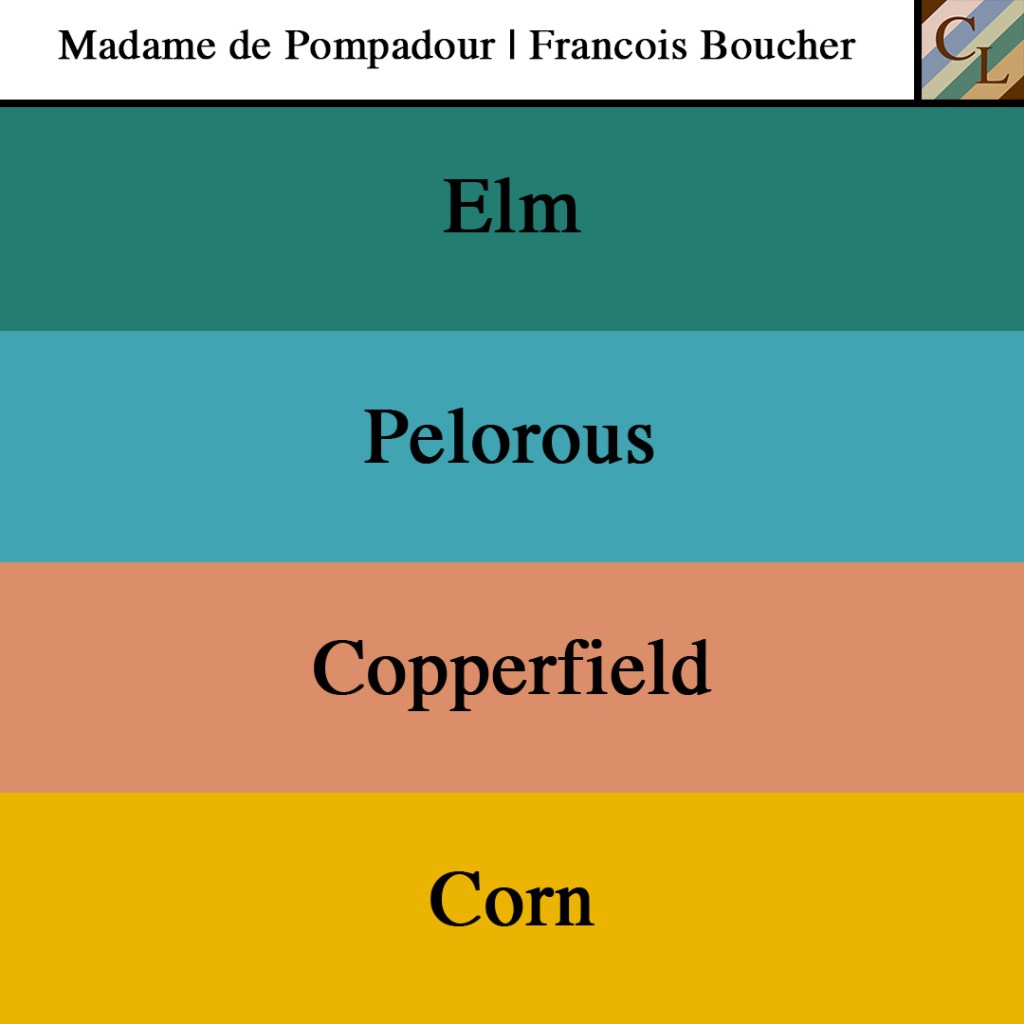
Looking at such a beautiful and radiant painting, we viewers receive a palette of mixed colors. Madame de Pompadour delivers youth and beauty through the cool color palette of green and blue while giving us status and power through the warmer colors of gold and pink.
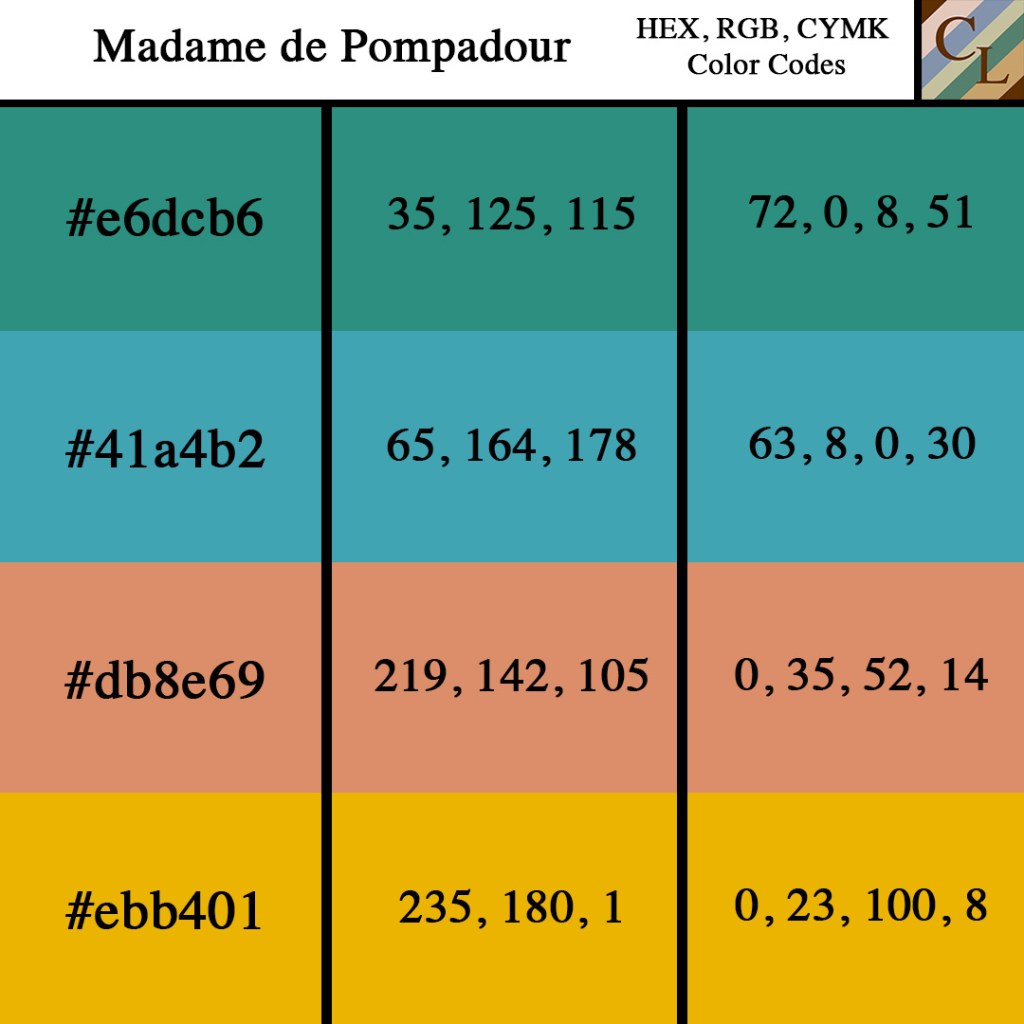
Elm and Pelorous can be seen as the majority color that flows through the dress of Jeanne Antoinette Poisson. This particular shade of blue-ish green gives the madam a youthful look and compliments her scenery and contrasting colors well. The greenish tones within elm play on the age of beauty, it is said that she appeared much older than she looks yet the color of her gown takes away from that age. And yes, it is a painting and we cannot see age but for those who knew her at the time, the colors of her dress complimented by the youthfulness of her face left a stain in the minds of many, especially King Louis XV. While Pelorous is also found within the dress, it complements the room by highlighting the warmness of the contrasting color palette.
Copperfield is seen in the roses, the middle portion of her dress, her shoes, and her choker. Copperfield takes on a blush/salmon-like color and as it is littered throughout her dress and outfit it highlights the youthfulness of her face and stands out as a symbol of femininity. If there were two things women of this age tried to achieve the beauty of youth and feminine looks/qualities and Boucher ensured to deliver this while painting Jeanne Antoinette.
Corn is the name of the color that represents gold. Corn surrounds the Madam and why? Because of her status, gold as we all know is the color that is most connected to royalty, money, and even the gods. When the madam entraps herself with gold in a beautiful composition as such she is visually expressing and communicating her status with all those who see it, including King Louis XV and his queen. Though the color is representative of gold, visually it does take on the color of mustard which tells of the madams’ excessive behavior while being a part of King Louis XV’s court.
Personal Viewpoint on the Artwork.
All in all, this portrait has a great story behind it while being visually pleasing. I’m used to seeing portraits that have a dark and mundane color scheme usually accompanied by colors of gold, bronze, gold, etc. When taking a boarder look at the painting, I still see that regular goldish frame that I am used to seeing when I encounter portrait paintings. When artistic viewers encounter this painting, they can’t help but be in awe of the woman that they see in front of themselves. The painting itself is littered with subliminal messages, such as the book in the madam’s hand, the large mirror that lies behind her, and what looks like an overflow of letters underneath the nightstand. One can almost assume that those letters are addressed to Madame de Pompadour from King Louis XV himself. For her to put staples of their relationship within the painting that would have been displayed to see by hundreds if not thousands… well, well. You are quite the madam indeed.
References:
https://www.wikiart.org/en/francois-boucher/madame-de-pompadour-1756-1
https://www.wikiart.org/en/francois-boucher
Next in Set A: Houses on the Achterzaan | Claude Monet (1871)
 Chroma Illuminosity
Leave a comment