Background and History of Art Form
- Year of publication for artwork: 1961
- Genre/Style: Expressionism
- Media/Medium: Oil on Board Canvas
- Dimension: 45 x 60 cm
Background and History of Artist
- Full Name/Recognized Name: Gerard Sekoto (South African)
- Born Date of Artist: 9th December 1913
- Death Date of Artist: 20th March 1993
- Occupation: Painter
- Movement: Social Realism
Brief Overview/History of the Artwork
- Following World War II Boulevard St Germain, located on the Left Bank, across the Seine from the Tuileries, rivaled Boulevard Montparnasse as the intellectual center of Paris. There are few countries in the world to rival France in its respect for Jazz musicians and Jazz as an art form.,
- Sekoto was able to find employment at l’Echelle de Jacob (Jacob’s ladder) – one of Paris’ trendy nightclubs at the time – when the owner heard him play the piano at an audition he had stumbled upon.
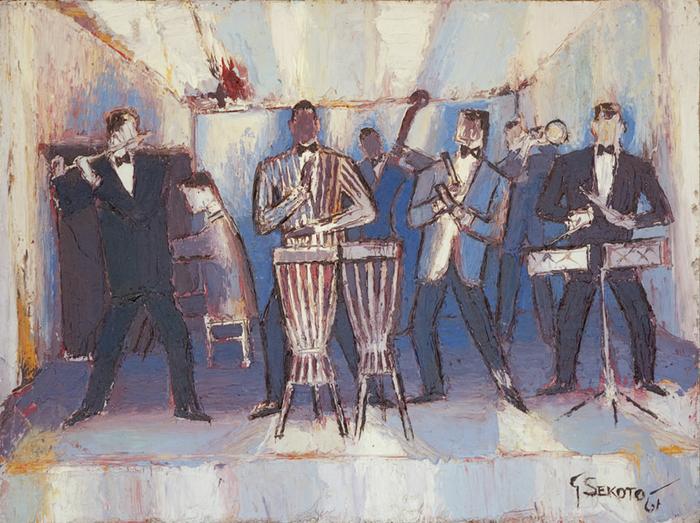
- By using thick impasto brushstrokes to accentuate the rhythmic composition of angular shapes, Sekoto creates a visual beat in ‘Jazz Band’.
- His palette is dominated by grey and blue hues, recreating the smoky haze of the underground nightclub scene.
- The tight composition echoes the confined cellar space, and draws the viewer in as if seated at a table, nodding approvingly while listening to the live music.
- Commenting on this painting, Sekoto said: “I played for a students’ café, then various other bars where the clients had more money and where the French and tourists paid more. This is one of the St Germain nightclub cellars. The players are not my pals nor was the picture done on the spot.”
Analysis of the Colors/Theme
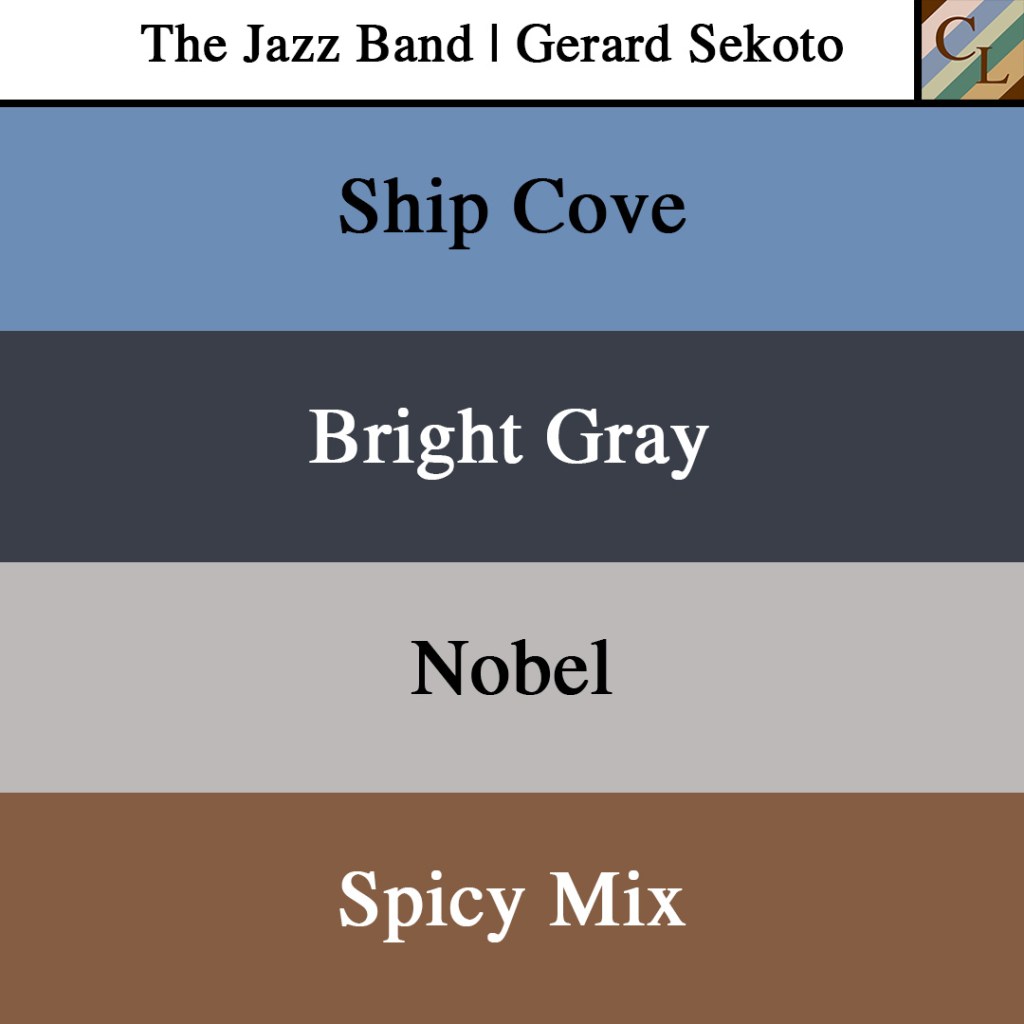
Looking at this cool color palette, we are transported into the visual depiction of the jazz band that Sekoto had in mind. the movements in this painting take center stage as the figure shows us the feeling of the music that is being played. The figures of the men in the jazz band are our foreground while in the background the blues and greys tell of the soothing overall nature of the color palette. But enough of this, let’s get into the color discussion!
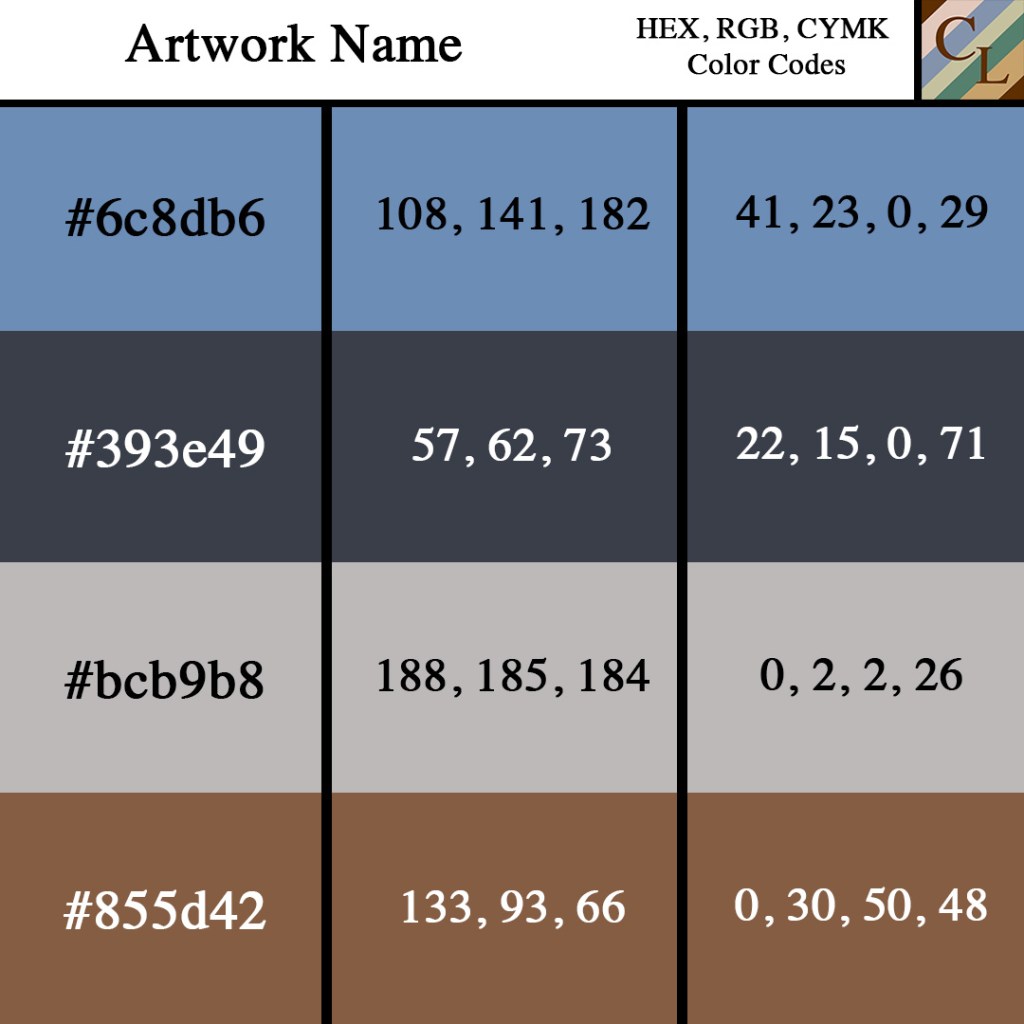
Ship Cove is the blue that is showcased in the background of the painting and holds the painting down by being the foundation of the colors that are to be built upon. As the musical figures dance and asway in the wind, Ship Cove blends in with the other colors giving us another layer of movement within the painting. What Ship Cove also does is that it draws us into the painting being a connective color between the painting and our eyes, a sort of next-level communication when you think about it.
Bright Gray is shown within the darkness of the two male figures on the far right and left side of the painting playing the flute and the steel drums. This color can also be seen slightly in the figures in the background in a mixture of the Ship Cove blue. This is an ironic name for this color because when we think of a bright gray usually I think of a Nobel grey. However, in this color, we see bright refers to the brightness of the grey which is the style that the color palette takes on.
Nobel grey (which I think is one of the truest colors of grey) is seen in combination with the light blues in the upper and lower portions of the painting. Nobel serves as an anchor to the rest of the painting. It is a neutral color and in combination with the blues and subtle greys makes a grounding box for painting the picture within. When you take a step back and look at the painting you can see Nobel grey on the far right and left of the painting which completes a frame Sekoto painted the figures.
Now, Spicy Mix is a color that is subtle throughout the entire painting however is the glue that brings everything together and when you notice it, it completes the painting in full view and reveals how intricate Sekoto hands were in the crafting of this piece. Hints of Spicy Mix can be seen in (from left to right) the wall, the piano, the two male figures in the foreground, the clothing and drums of the drummer, and the face of the bass player. It is important to note that there is an offset in the painting as the left side holds more brown and the right side holds more ship cove blue that was mentioned earlier. This creates more movement in the painting as the viewer’s eyes travel from musician to musician.
Personal Viewpoint on the Artwork.
Looking over the painting again makes me proud to be a musician, an artist, an African-Caribbean descendant. What I truly love about the painting is its cool colors and tones, even though there are some movements of brightness it still has a way of moving very softly. The movement of the painting is another favorite thing of mine because the combination of Ship Cove and Spicy Mix makes the painting feel so grounded that it has a concrete pattern to its movement. Overall, I enjoyed analyzing this piece and it is the color scheme, it has landed its place in my memory bank as one of my favorite immersive pieces.
References:
https://www.wikiart.org/en/gerard-sekoto/the-jazz-band-1961
https://www.wikiart.org/en/gerard-sekoto
https://en.wikipedia.org/wiki/Gerard_Sekoto
Next in Set A: 1024 Colours | Gerhard Richter (1973)
 Chroma Illuminosity
Leave a comment